

Dubai & Technology: A Match Made in Heaven for Innovators
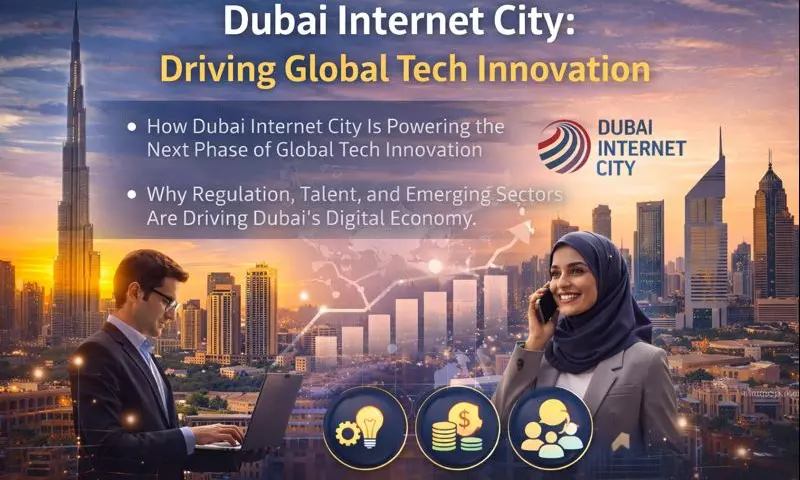
How Dubai Internet City Is Powering the Next Phase of Global Tech Innovation
Why Regulation, Talent, and Emerging Sectors Are Driving Dubai’s Digital Economy
Dubai is a single flight away for much of the world's population, making it the perfect location for businesses to flourish.
However, for founders and investors building the next generation of technology companies, geography is not Dubai's only attraction.
For example, the alignment of talent, capital, infrastructure and regulation is perfect, allowing entrepreneurs to build, test, launch and scale at speed.
Dubai Internet City is central to the ecosystem. Designed to be a free zone that attracts multinational companies with regional operations, it has grown into something more dynamic.
It has become one of the clearest expressions of how Dubai's economic ambitions translate into practical outcomes for the technology industry.
From Headquarters to Creation Hub
Dubai Internet City has transitioned from a place where companies simply stationed their headquarters to a hub where they actually build. Engineering teams, data scientists, product designers and researchers have now taken over the district from senior management.
Global technology firms view Dubai Internet City and the wider Middle East region as a base for experimenting and developing ideas into real-world products and services.
Dubai encouraged this shift by consistently investing in infrastructure. New offices, collaborative workspaces and innovation campuses were built for tech firms that want flexibility and scalability.
The United Arab Emirates (UAE) has simultaneously refurbished its regulatory framework to foster long-term growth, giving companies confidence to deploy capital and talent.
Dubai Internet City now hosts thousands of companies, both early-stage start-ups and global behemoths, looking to establish themselves in the Middle East.
This set-up creates a self-sustaining loop whereby international firms attract talent, which in turn attracts start-ups, which then generate innovation to keep the ecosystem relevant.
Regulation as a Competitive Advantage
Dubai's approach to regulation has helped differentiate the emirate from its counterparts. While others react to innovation, policymakers anticipate it and design frameworks that allow innovation and flexibility to co-exist even under strict oversight.
To tech companies operating across borders, this regulatory clarity is just as important as capital.
Uncertainty regarding new sectors such as artificial intelligence (AI), Web3, and financial technology (fintech) has slowed investment in other Middle Eastern nations.
However, the rules are clear in Dubai, and dialogue is always open between regulators and industry stakeholders, lowering barriers to entry and reducing execution-related risks.
Intriguingly, this same philosophy is extending into new elements such as gambling and digital entertainment, where Dubai is awash with opportunities.
Gambling and Digital Entertainment – A New Frontier
The United Arab Emirates traditionally outlawed all forms of gambling, but government prohibition did not deter widespread interest in the activity. Many Arab citizens turned to reputable comparison platforms such as haztayeb-uae.com/en/ to find the best online casinos in Dubai. This gave them access to popular games such as slots and roulette.
With the UAE looking to diversify its economy after years of overreliance on crude oil, it is now eagerly exploring this rapidly expanding global market.
While the sector is still in its early stage compared to other markets worldwide, this is the type of industry the Dubai Internet City ecosystem is designed to support.
Gaming platforms need real-time payments, data analytics, cybersecurity, responsible gaming tools and scalable cloud infrastructure. These are the kind of services the district is built to handle.
As the General Commercial Gaming Regulatory Authority (GCGRA) continues to establish the framework, Dubai will attract companies seeking a stable base from which to serve multiple regions.
There is also a spillover effect, as iGaming skills such as cybersecurity and website design can be transferred to fintech, e-commerce, media and many other sectors.
Talent Pipelines and the Knowledge Economy
A key strength of Dubai's tech ecosystem is the convergence of education, research and commercialisation. Dubai Internet City fits into a broader network that includes academic institutions, training centres and science parks. This combination is particularly important in this era, where competitive advantage is based on skills and not scale alone.
Graduates and researchers can seamlessly move into start-ups or multinational research and development teams, while companies get premium access to a highly ready workforce. It reduces the risk of being unable to find specialised talents quickly enough, especially in the early stage.
Incubators and accelerators also play a critical role here. They do more than provide office space and funding, helping founders to become better leaders, refine go-to-market strategies and connect them with key partners.
Several of the region's most exciting tech success stories have come from this environment, a sign that companies can be built locally without sacrificing global ambition.





